
Best Practice Updates
Time-Critical Medicines: Why Timing Is Vital For Patient Safety
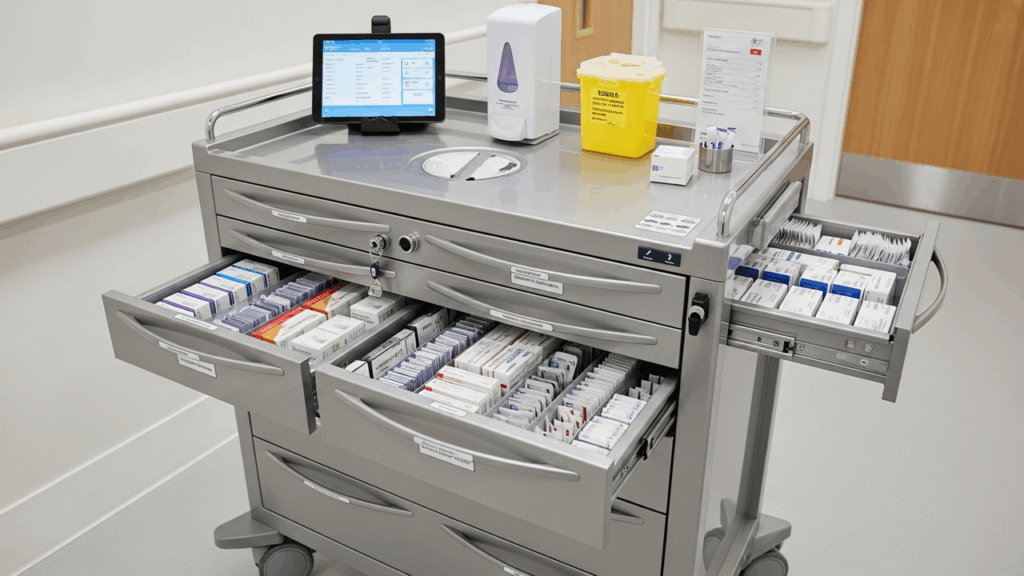

You may have heard of the term time-sensitive medicines or time critical medicines. But what does this mean for you when you’re giving day-to-day medicines support?
Put simply, some medicines must be given at the right time because the timing affects how well they work and how safe they are.
This could mean:
- There’s a specific time window for administration
- It needs to be taken at the same time every day for best effect
- Doses too close together may cause harm because the previous dose hasn’t worn off (causing increased/toxic levels in the blood).
- The medicine must be given at a different time from food or other medicines
- The medicine must be given at the same time as food (I’m looking at you lurasidone👀!)
If time critical medicines are late — or early — it can have a clinical effect which will impact the client. In some cases, it can even lead to serious harm.
So, when you see “time-sensitive” written on a care plan, that’s your cue to slow down, pay attention and make sure the timing is right.
For now let’s look at some everyday examples for the first 3 points.
Why timing really matters: Everyday examples
Parkinson’s Disease medication
A national audit (1) in 2022 found that only 42% of people with Parkinson’s admitted to hospital received their medicines on time. That’s less than half — and the impact on the patient’s wellbeing can be huge.
Parkinson’s medicines such as levodopa are very time critical. People switch between an “on phase” (medicine working) and an “off phase” (medicine wearing off). If a dose is late, the “off” phase can hit harder — more tremor, stiffness, mobility issues, swallowing problems.
For this reason, Parkinson’s medicines should be given within 30 minutes of the stated time.
Epilepsy medication
Epilepsy medicines work best when there’s a steady, consistent level in the bloodstream — which is why timing matters. That said, the exact timing and flexibility can vary depending on the specific medicine.
If doses are missed or given late, the level of medicine in the blood can drop, making seizures more likely. If doses are given too close together, levels can build up instead, which may lead to dizziness, confusion or excessive sleepiness.
Many epilepsy medicines have long half-lives (how long it takes for the body to remove the medicine), which means a one off late dose is unlikely to cause a seizure. However, epilepsy is highly individual, and each medicine has its own release profile. Make sure when you first reconcile a person’s medicines, you build a complete picture of what they’re taking and how it works for them. When setting up dose schedules also consider the person’s lifestyle, for example, waking someone early just to take their epilepsy medicines might leave them tired, which in itself can trigger seizures.
Our general advice is to aim for twice-daily dosing at regular intervals, but with a bit of flexibility if the person wakes up late, or goes to bed late. Make sure you consider adjustments if the person goes on holiday and changes time zones. And remember, regularly missing doses can gradually reduce medicine levels — and that’s when the risk of seizures increases. The Epilepsy Society provides some guidance on late doses here.
Paracetamol
It might be one of the most common medicines we administer, but timing still matters. Why is this?
Paracetamol is safe when used correctly, but your liver can only process so much at a time.
If doses are given too close together, or the total daily amount is exceeded, paracetamol builds up in the body and can cause serious, sometimes fatal, liver toxicity.
Paracetamol overdose often has no early symptoms, so if too much is given, don’t wait for signs — seek medical help immediately as the ability to treat it declines rapidly over time.
To protect your clients and the staff administering medicines.
- There must be at least 4 hours between each dose
- Be aware- maximum daily dose varies — sometimes by weight (watch out for this and follow the care plan!)
- Giving it too early risks overdose (the previous dose hasn’t been cleared from the body)
- Giving it too late can lead to unnecessary pain or fever
Therefore, always record the exact time (and dose) of paracetamol (or a paracetamol-containing product) given and make sure your care plan, PRN protocols and MARs are clear and easy to use to ensure accurate recording.
Insulin: If someone has Diabetes, timing of insulin injections matter because of the interplay with meals and blood glucose control. The “time critical” list often includes insulin injections for this reason.
Giving insulin too early before food can make the blood sugar level drop too soon, causing hypoglycaemia, while giving it too late after eating can send levels too high, leading to hyperglycaemia — getting the timing right helps keep things safely in balance.
So, what’s our advice?
1. Know the medicine it’s timing requirements (and record this)
You need to understand what the medicine is for and the timing requirements. Staff must understand the impact on a client if medicines are administered at the wrong time.
Care plans must state whether a medicine is time specific and when it should be given.
Medicines Reconciliation is the perfect opportunity to gather this information when an individual transfers to your care or if any medicines are started or changed.
The CQC asks for staff responsible for medicines reconciliation to be “trained and competent”(2) – our Medicines Reconciliation course teaches the skills and knowledge to accurately complete medicines reconciliation, including a section highlighting the importance of time-critical medicines.
2. Make sure they are on time
Have systems in place to make this easy and reliable for all staff (including agency staff!).
Some eMAR systems will alert you when a time-critical medicine is coming up, if you don’t have this how will you remember? A few practical tips if a dose falls outside usual round times:
- Set an alarm or reminder
- Add it to handover
- Put a note on the treatment room board
Simple reminders often make the biggest difference. What else could you do? What about individuals that self administer, will they need reminding?
3. Don’t run out
You can’t administer a medicine on time if there’s nothing left to give!!
Have a robust system to make sure you don’t run out. If there are shortages (because the medicine is unavailable), speak to the pharmacist and prescriber about alternatives. Make sure you know your procedure for emergency supplies — you’ll be glad you did the day you need it.
If you do run out, complete RCA (root cause analysis) to find out what went wrong and how to prevent it recurring (sorry to name drop another course, but if you’re interested see our course on Managing Medication Errors).
4. If it’s been missed/omitted then seek advice, monitor and learn-
If a medicine is given at the wrong time or missed entirely, contact a healthcare professional straight away. They’ll advise:
- What to monitor
- What to do with the next dose
- What needs updating in the care plan
Understanding why the dose was missed is key to preventing the same problem happening again. This is how systems get safer — one learning point at a time (Managing Medication Errors).
Final thoughts
We put a lot of emphasis on “right resident, right medicine, right dose”, but let’s not forget right time.
For time-critical medicines, timing can make all the difference. It’s not just ticking a box — it’s helping someone stay well, comfortable and safe.
Get the timing right, and you’ll reduce risks, improve outcomes, and stay firmly aligned with CQC expectations for safe, high-quality care.
References:
(1) 2022 UK Parkinson’s Audit – Summary Report (page 50)
(2) CQC guidance on Medicines reconciliation – https://www.cqc.org.uk/guidance-providers/adult-social-care/medicines-reconciliation-how-check-you-have-right-medicines